I barely slept. When something truly ends, your body takes time to realize the world has shifted.
That morning, I made tea in my apartment in Del Valle, removed the small earrings Patricia always mocked as “too plain for a Rivas wife,” and set my phone face down on the table.
For three years, I had done what many women quietly do just to survive—I made myself smaller to fit into a family that never wanted to see me fully.
I softened my voice.
Adjusted my style.
Filtered my responses.
Swallowed my silence.
Even downplayed my own success.
Not because I was ashamed, but because I learned early that the Rivas family only felt comfortable when they could look down on me. Patricia used that to humiliate me. Fernanda turned it into mockery. Don Álvaro hid behind neutrality. And Daniel… Daniel chose not to see what his family really was.
At 11:30, while reviewing documents at my dining table, the first message arrived.
Daniel: “Don’t do anything stupid. Mom was upset.”
I glanced at it and smiled faintly. Predictable.
I didn’t reply.
Ten minutes later:
Daniel: “We can talk tomorrow before ten.”
Still nothing.
At midnight, Fernanda texted:
“If this is for attention, it’s coming off as desperate.”
I blocked her without finishing the message.
At 1 a.m., Patricia called. Again. And again. On the fourth attempt, she sent a voice message.
I didn’t listen.
I already knew the tone—offended, commanding, certain the world still revolved around her demands.
Instead, I opened another chat.
Arturo Vela—my lawyer.
I typed:
“Tomorrow at ten. Be there.”
He replied instantly:
“Already prepared. Don’t worry, Director.”
Director.
The word steadied me. Not because I needed reminding, but because for so long I had been shaped into something smaller that hearing my true position spoken plainly restored something essential.
At seven, I got dressed in an ivory suit—too “simple” for Patricia, too “formal” for Daniel.
Perfect.
This wasn’t reconciliation.
It was closure.
As I fixed my hair, I remembered the first time Patricia met me. Daniel had asked me beforehand not to talk too much about my work because his mother “felt uncomfortable around strong women.”
I agreed—young, in love, and naïve.
At dinner, Patricia scanned me like inventory and asked:
“What does your family do?”
Not who they were. Not with curiosity. With judgment.
I answered, but minimized everything. My mother, a teacher. My grandfather, land. My career, finance.
I didn’t mention the truth—the business legacy, the investments, the financial structure I had inherited and managed with precision.
I hid it because I thought humility was grace. Because Daniel asked me to. Because I wanted love, not scrutiny.
How expensive that mistake turned out to be.
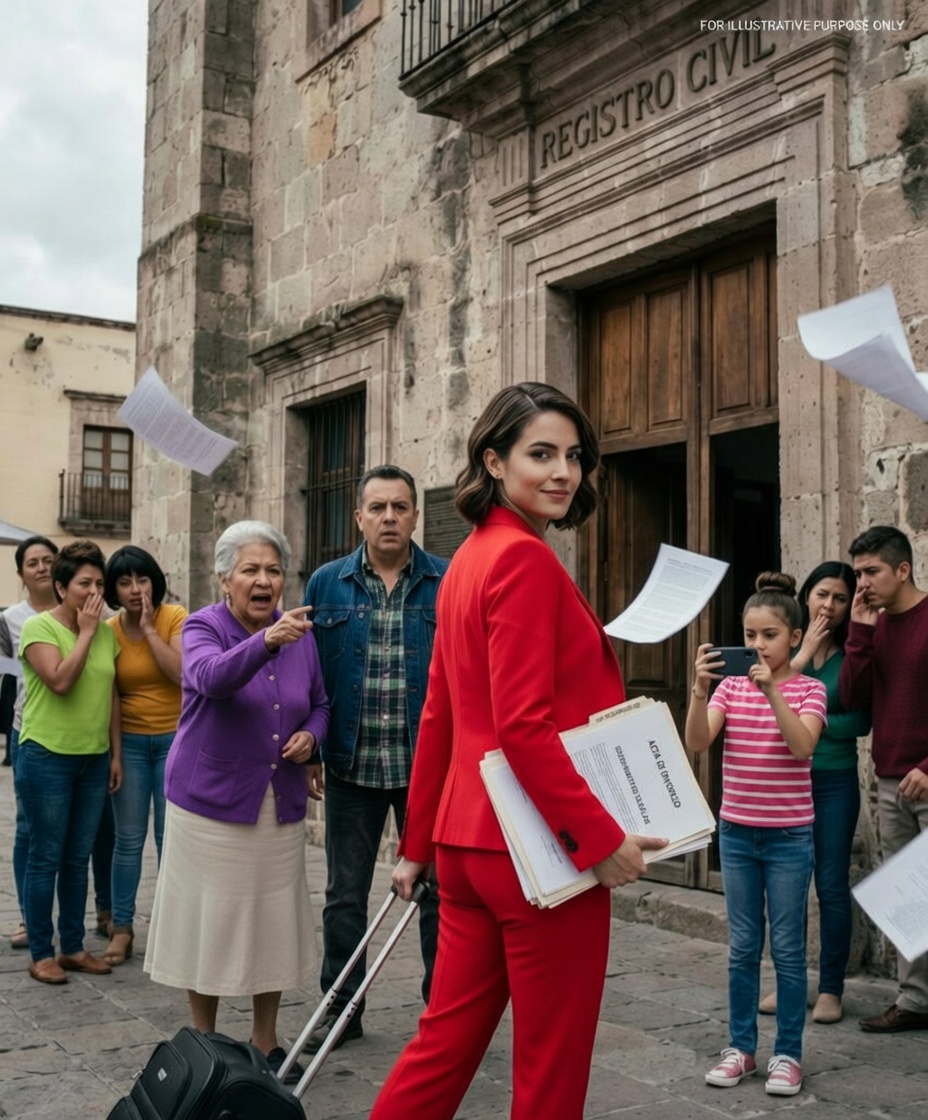
I arrived at the Civil Registry at 9:30.
Arturo was already there, composed as always.
“They’re here,” he said. “All of them.”
Of course they were.
The Rivas family never missed a performance.
In the waiting room stood Patricia, dressed like she was attending a funeral she didn’t yet understand. Don Álvaro beside her. Fernanda in sunglasses indoors. Daniel staring at his phone. Even extended relatives had come—spectators for what they assumed they would control.
Patricia approached first, wearing that familiar mask of false concern.
“Lucía,” she said, “you still have time to stop embarrassing yourself.”
I met her gaze calmly.
“Good morning.”
That unsettled her. She expected tears or anger. Calmness always irritated her more.
“Daniel wants to speak to you privately.”
“No.”
“This isn’t how things are handled.”
“They’ve been handled like this for three years—by all of you speaking and me absorbing. Not today.”
Fernanda laughed.
“She thinks she matters now because she brought a lawyer.”
Arturo responded smoothly:
“She doesn’t think she matters. She does.”
Silence fell instantly.
For the first time, something shifted.
Inside the hearing room, we sat across from each other. Just Daniel and me. Patricia tried to enter but was stopped.
This wasn’t her stage anymore.
The judge reviewed our names.
Daniel quickly interrupted.
“This isn’t mutual. She’s overreacting.”
Arturo spoke instead.
“This is not a single incident. It is a pattern—psychological harm, ongoing humiliation, and financial imbalance.”
The judge turned to me.
“Do you wish to proceed?”
I looked at Daniel—not the man I married, but the one who stayed silent every time it mattered.
“Yes.”
He sighed, irritated.
“Lucía, this is too much.”
The judge silenced him.
Then Patricia burst in again, accusing me of manipulation.
She was warned.
Still, she didn’t understand—this was no longer her territory.
When finances were discussed, Daniel straightened, confident.
“There’s nothing complicated,” he said.
Arturo calmly placed documents on the table.
Proof.
That I funded most of the apartment.
That I paid the mortgage.
That I sustained his business during its worst periods.
Daniel froze.
“That’s not possible.”
“It’s documented,” Arturo replied.
The illusion cracked.
Fernanda panicked. Patricia turned pale. Daniel’s confidence dissolved.
For three years, I hadn’t just endured them—I had supported them.
Quietly.
Without recognition.
Without humiliation.
Because I loved him.
Because I believed in him.
Because I thought love meant endurance.
What irony.
I held them up so long, they believed they were standing on their own.
Daniel whispered:
“That was support. You can’t use it like this.”
I finally met his eyes.
“Use it how? Truthfully?”
More documents followed.
My real position.
My company.
My role.
Silence.
Not because of money.
Because of realization.
I had never needed them.
Daniel looked broken.
“Why didn’t you tell me?”
“I did. You just never listened.”
Patricia’s voice trembled.
“Why did you allow this?”
I paused.
“Because I loved your son. Because I believed he would change. Because I thought being discreet was dignity—not self-erasure. And because you are very skilled at making a woman feel wrong for defending herself.”
No one had an answer.
The hearing moved forward.
Daniel rushed to suggest an agreement.
Arturo agreed—with conditions: recognition, restitution, and protection from defamation.
Fernanda accused me of caring about money.
I corrected her calmly.
“No. I spent money maintaining your image. This is about dignity.”
When it ended, I stood.
Outside, Patricia approached me again—no longer powerful, just smaller.
“I didn’t understand,” she said.
“You did,” I replied gently. “You just believed there would be no consequences.”
Fernanda grabbed my arm.
“You lied!”
“No. You created a version of me and believed it.”
Don Álvaro called me “daughter.”
Too late.
Daniel stood before me.
“I’m sorry.”
Finally.
But too late.
“Me too,” I said. “Not for the divorce—but for waiting so long.”
And I left.
Outside, the city felt alive again.
My phone buzzed.
“Director, everything is ready for tomorrow.”
This time, I replied:
“Perfect. Proceed.”
I leaned back, closed my eyes, and let myself feel it—sadness, yes, but also clarity.
Later that day, I returned to my office.
Work continued.
Meetings. Decisions. Strategy.
And not once did I think about the Rivas family.
That was what healed me most.
Not revenge.
Not revelation.
But realizing my life had always been mine.
Complete.
Solid.
Untouched by their illusion.
Months later, I heard fragments—regret, silence, reputation fading.
I felt no triumph.
Only justice.
And one night, standing alone with a glass of wine, I understood:
The worst humiliation doesn’t come from those above you.
It comes from those who need to believe you are beneath them.
And when they finally see the truth—
their pedestal disappears.
That’s what happened.
It wasn’t the divorce that broke them.
It was realizing…
I had never been below them.
I had only bent down—so they could feel taller.
And the moment I stood up—
everything ended.