I believed the hardest part would be watching my mother fight for her life in a hospital bed. I never imagined that while she lay unconscious, a quiet test of character was taking place behind our backs.
My mom, Shirley, is 82 years old and the backbone of our family. She planted her own tomatoes, fixed her own fences, and once chased a raccoon off her porch with a broom while laughing. Then, the stroke came out of nowhere. One minute she was pruning roses in the backyard; the next, she was face down in the dirt. Mrs. Patterson from next door saw her fall and called 911.
By the time my brother Dave and I reached the ICU, Mom was hooked up to machines. When Dave called his wife, Brenda, she refused to come. “I’m too emotional. I won’t be able to handle seeing Mom in the ICU,” she claimed. That should’ve been my first warning.
The Empty House
The doctor didn’t sugarcoat it: “Prepare yourselves. She suffered a massive stroke.” While Dave stayed at the hospital, I drove 20 minutes to Mom’s house to grab comfortable clothes. When I turned into the driveway, I noticed deep tire tracks cut into the lawn. The front door was slightly ajar.
Inside, the house felt hollow. The Victorian settee was gone. The Persian rug? Missing. The walnut dining table my late father restored by hand, the silver tea set, the glass cabinet—all gone. This wasn’t a random robbery; someone knew exactly what to take.
I ran to Mrs. Patterson, who opened her door before I even knocked. “Oh, honey, I was going to call you,” she said. She revealed that Brenda had been there two hours ago with a U-Haul and two men, claiming she was moving things for “safekeeping.”
“Protecting the Assets”
I called Brenda immediately. After a long silence, she sighed. “Emily, don’t start. I’m protecting the family assets. Your mom isn’t coming back… I’m preventing chaos before the vultures circle.”
When I screamed that Mom was still alive, Brenda’s voice turned cold: “It’s basically over. It’s already sold. It’s what I’m owed for tolerating her all these years.” She accused Mom of never trusting her and hung up.
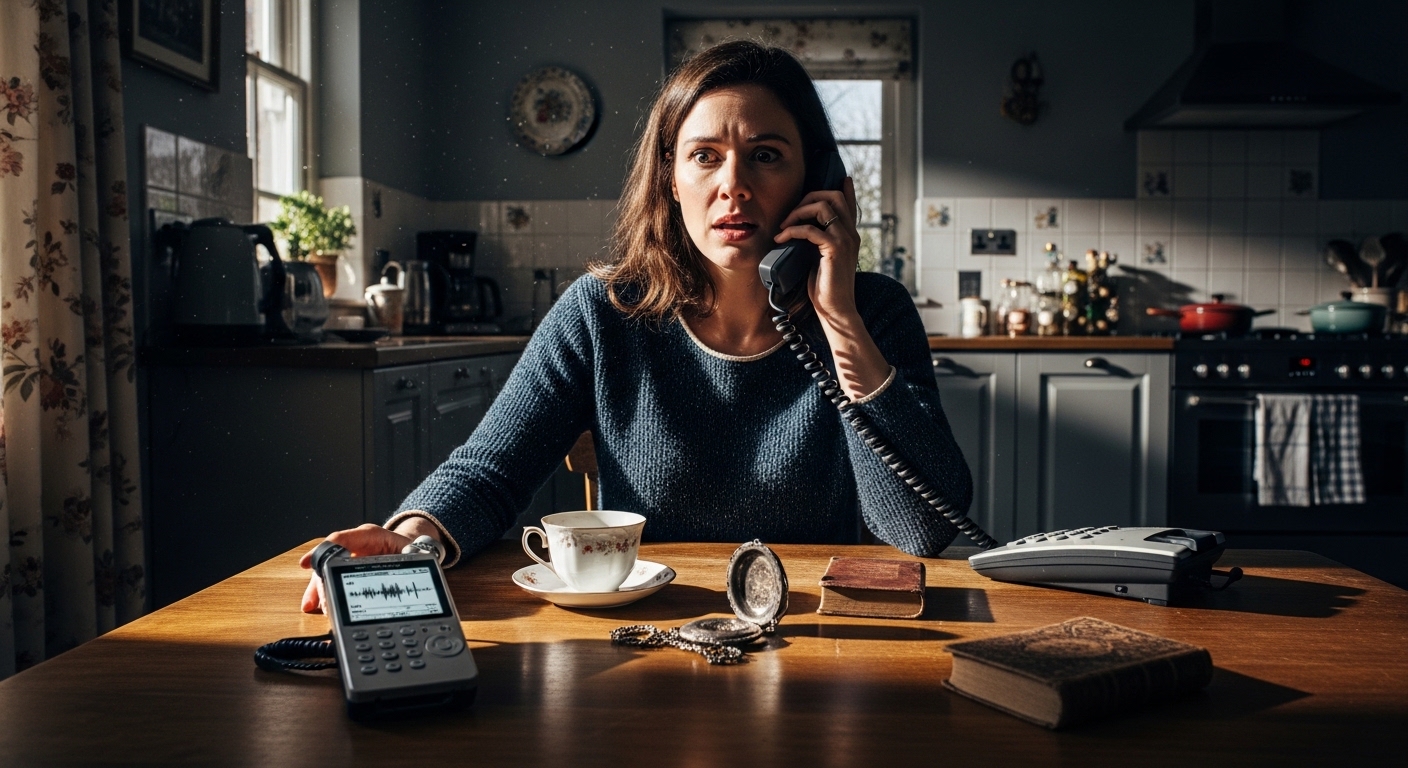
Ten minutes later, Brenda called back, sobbing hysterically. “Emily, there’s a voicemail! Your mom left it five minutes before she collapsed. You have to meet me at the house. Only you can save me now.”
The “Vicious” Plan
At the house, a pale Brenda played the recording. Mom’s voice was steady:
The room went silent. Brenda was trapped. “The buyers paid! If the lawyer finds out, I lose everything!” she wailed. I told her the only chance was to buy it all back and return it immediately. She rushed out to spend her own money to undo her theft.
The Recovery and the Reckoning
Miraculously, Mom stabilized. When she finally opened her eyes and asked for water, I almost cried. Once she was aware, Dave and I told her everything. She listened calmly and then asked us to call Brenda.
Brenda arrived in the ICU, eyes red, claiming she “panicked” but had “fixed it” by bringing everything back. Mom’s gaze didn’t waver. “That wasn’t the point,” she whispered.
Mom revealed that she had told Dave and me about the clause beforehand. She had given Brenda responsibility, and Brenda chose greed. “You’ve been pushing for control for years,” Dave added. “You weren’t helping; you were positioning yourself.”
Brenda snapped, “This is betrayal! I’m family!” “You won’t be for long,” I replied.
Dave didn’t hesitate: “I filed for divorce.” He told her it wasn’t about the furniture; it was about the fact that she emptied a dying woman’s home. The trust clause had been triggered the moment she signed those sales agreements. Returning the items couldn’t undo the character she had revealed. Brenda walked out without another word.
A House Restored
Two weeks later, Mom was home. The house looked exactly as it had before, just cleaner. Mom ran her fingers along the walnut table and smiled. “Your father would be pleased.”
That evening, as the light filtered through the windows, I realized Mom hadn’t just protected her furniture—she had protected us. She reminded me that strength doesn’t always shout. Sometimes it waits quietly for the truth to surface, then stands firm when it matters most.