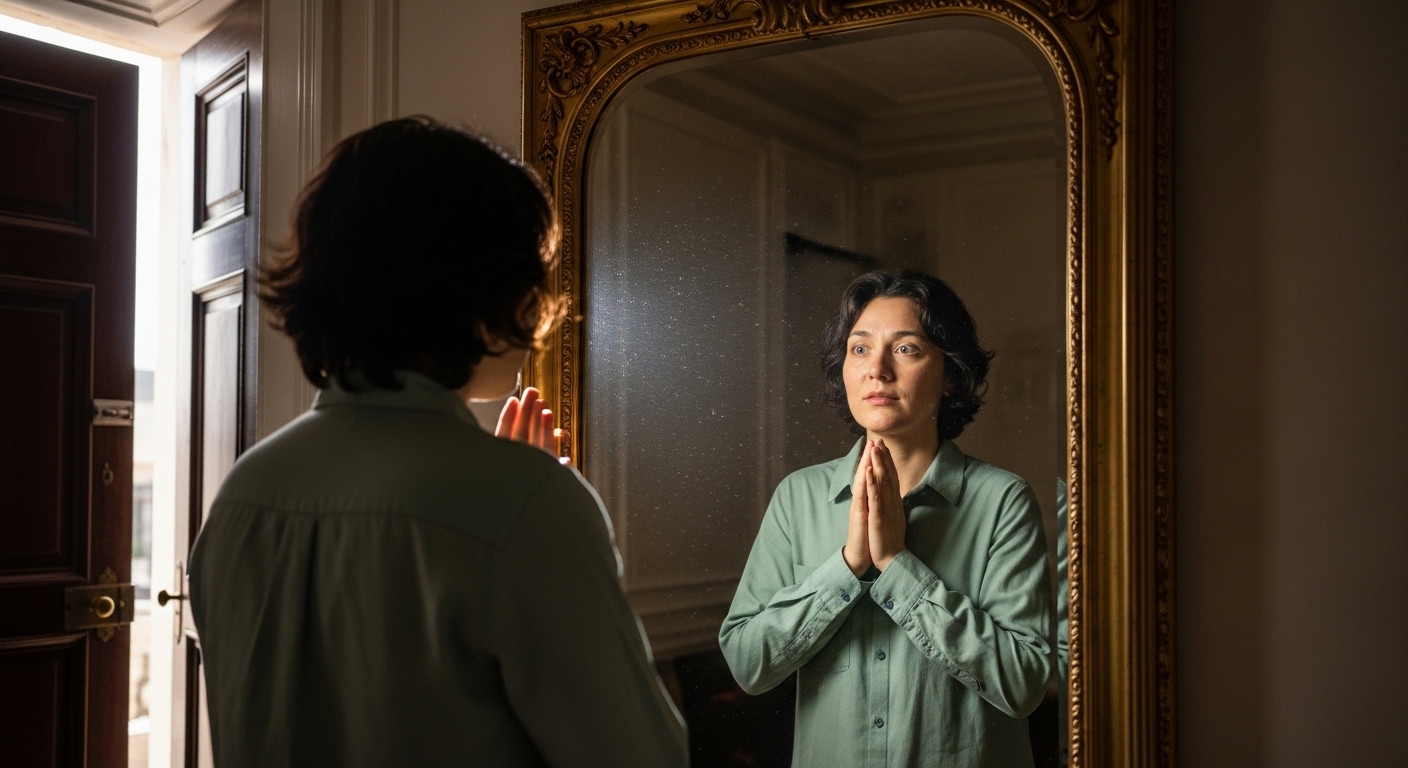
A woman came home early from work and was greeted by a sound that should have been comforting: familiar laughter. But when she caught a glimpse into the bathroom mirror, her heart stopped. She was horrified to see what looked like her husband kissing her sister. Blindsided by fury, she immediately confronted him—but as she stormed through the house, her sister was nowhere to be found. Her husband stood alone, bewildered, insisting that absolutely nothing had happened.
As she searched the rooms frantically, the chilling truth slowly began to settle in. The mirror hadn’t shown her a betrayal; it had reflected a distorted memory of an angle. It turned out her sister had stood close behind her husband earlier that day while they were simply joking around. From the specific, narrow angle of the doorway, the reflection had compressed their distance, making a casual moment look intimate, even romantic.
Later, her sister confirmed she had actually left the house long before the woman even arrived. Realizing she had completely misinterpreted the scene, the woman was left shaken—not by an act of betrayal, but by the terrifying realization of how easily fear and assumptions can dismantle a lifetime of trust. Sometimes, what looks like the absolute truth is merely a reflection—and doubt can be far more dangerous than betrayal itself.