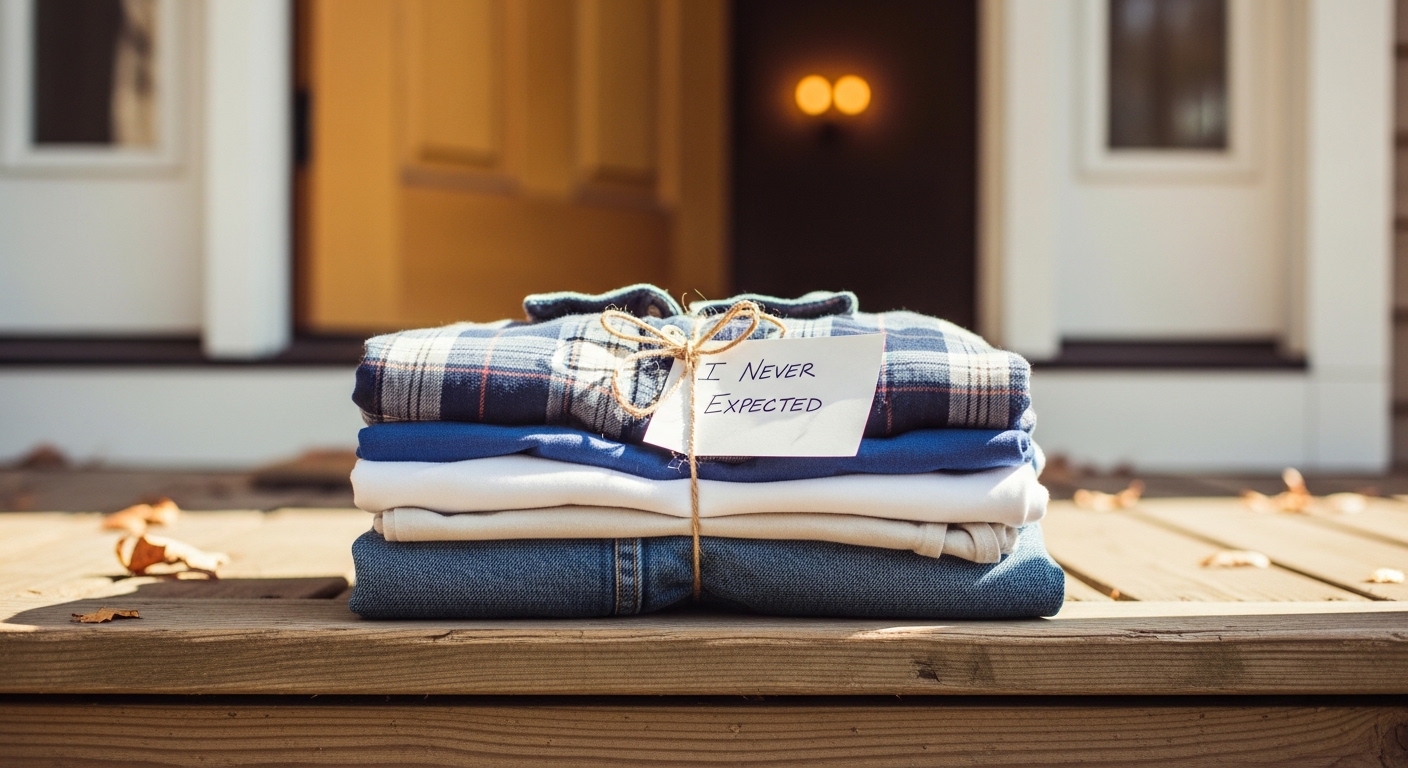
I sent a box of outgrown toddler clothes to a stranger, Nura, who had nothing for her daughter. A year later, the same clothes came back—washed, folded, and accompanied by a tiny yellow duck and a heartfelt letter.
Nura had escaped an abusive relationship, and the clothes had kept her daughter warm. The little duck became her child’s nightly comfort. Our friendship grew from that small act, our daughters became inseparable, and kindness kept flowing back and forth. All because a simple act of giving found its way home.
The Return of the Duck: The Beauty of a Circular Economy
When I first packed that cardboard box, I saw it as a way to clear out my closet. I had no idea I was packing a lifeline. When the box returned to my doorstep a year later, I didn’t recognize it at first. But when I pulled out the familiar floral romper—now smelling of lavender detergent—and saw that little yellow duck tucked into the sleeve, I burst into tears.
The letter inside explained everything. Nura hadn’t just used the clothes; she had cherished them as a sign that the world wasn’t as cold as the life she had left behind. That “tiny yellow duck” had been the only toy her daughter owned for months. By returning the clothes once her daughter outgrew them, Nura wasn’t just clearing space; she was passing on the hope she had received.
Today, our lives are a testament to the power of a “pay-it-forward” mindset. We’ve shared more than just clothes since then; we’ve shared advice, childcare, and countless cups of coffee. Our daughters, now nearly the same height, trade the yellow duck back and forth whenever one of them has a “scary” day at school. It’s a powerful reminder that while a single garment might wear out, the thread of kindness connecting two people can last a lifetime.