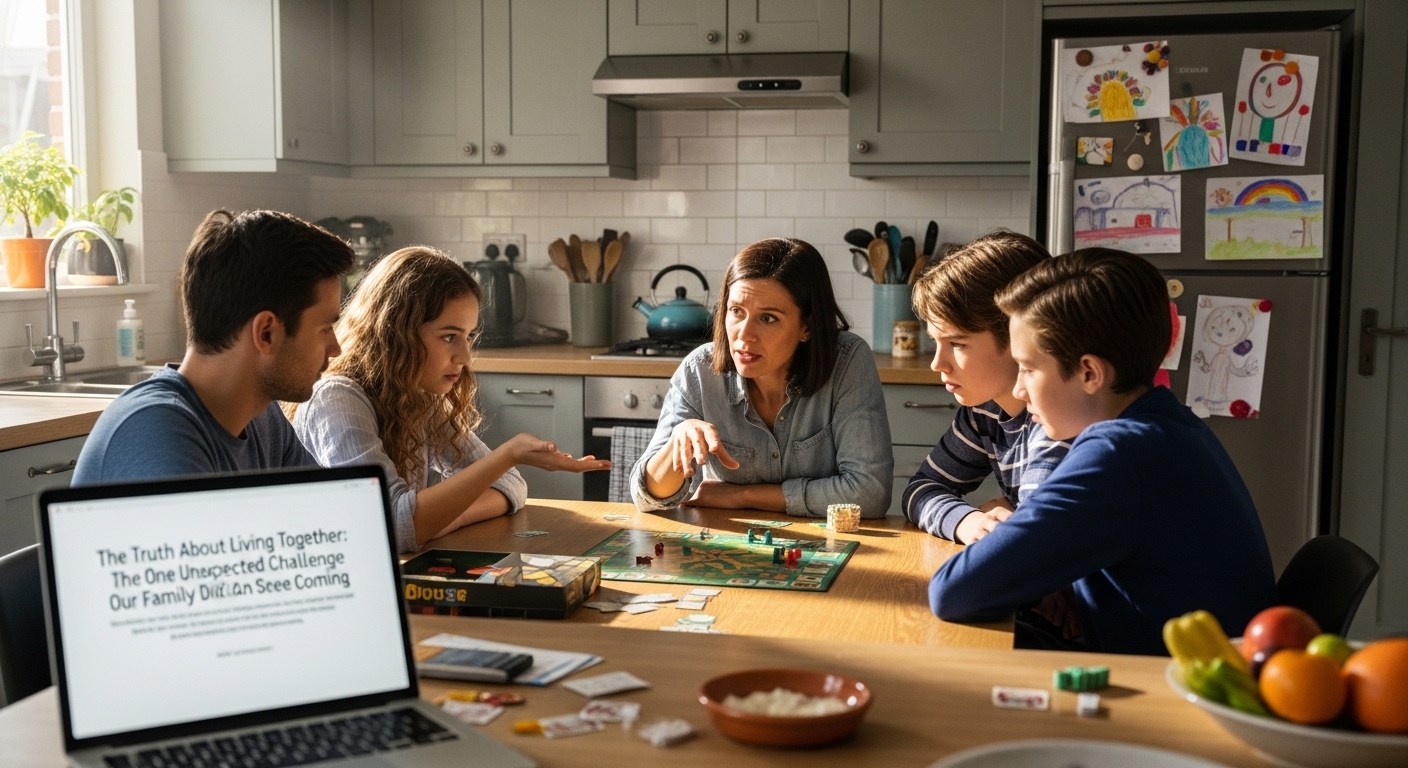
My husband has a 21-year-old son from his previous marriage. He came to stay with us for “a few days,” but it’s been weeks now. He refuses to leave or pitch in. I finally snapped, “Get a job or move out!” He just smiled. I froze when I found that he was secretly keeping a notebook filled with observations about our daily routines—what time we woke up, what chores we did, and even how often we argued. Nothing harmful, but unsettling enough to make my heart race.
When I confronted him, he admitted that he’d been trying to understand how a “functional home” worked. He said his mother’s place had always been chaotic, and he didn’t know what normal looked like. Watching us was his attempt to learn. His honesty softened some of my anger, but it didn’t erase the tension of having an unexpected adult roommate who still wouldn’t help with anything around the house.
My husband and I sat him down for a long talk. We explained that understanding a household wasn’t the same as participating in it, and that adulthood required effort, not observation. To our surprise, he listened—really listened—and agreed to start contributing. He even asked for guidance on job hunting, something he’d avoided because he was afraid of failing.
The shift wasn’t magical or instant, but for the first time, the house felt less like a pressure cooker. He began helping with dishes, applied to a few entry-level positions, and even cooked dinner one night—burnt, but thoughtful. It wasn’t the story I expected when he first walked through our door, but maybe it was the one he needed to finally grow into his own life.
The Aftermath: Breaking the Cycle of Observation
The atmosphere in our home has undergone a quiet transformation. The notebook, which once felt like a tool for surveillance, has been retired to a drawer, replaced by a growing stack of job applications and a shared calendar for household chores. We realized that he wasn’t being lazy out of spite; he was paralyzed by the absence of a blueprint.
The “Failure to Launch” phenomenon is a growing trend, with many young adults struggling to find their footing. In fact, current statistics show:
Living Arrangements: As of late 2025, approximately 45% of young adults aged 18 to 29 in the U.S. live with their parents, a figure that remains near historic highs.
Economic Drivers: While social factors play a role, financial barriers are significant; the cost of rent has outpaced entry-level wage growth by over 20% in several major metropolitan areas over the last five years.
Mental Health: Research indicates that roughly 30% of young adults living at home report significant “transition anxiety,” often rooted in a lack of practical life-skills modeling during their formative years.
Seeing him scrub a pan or prepare a simple meal—even if the toast is a bit charred—is a victory. He isn’t just an observer anymore; he’s an active participant in his own future. The tension hasn’t vanished entirely, but the “pressure cooker” has definitely been moved off the heat.