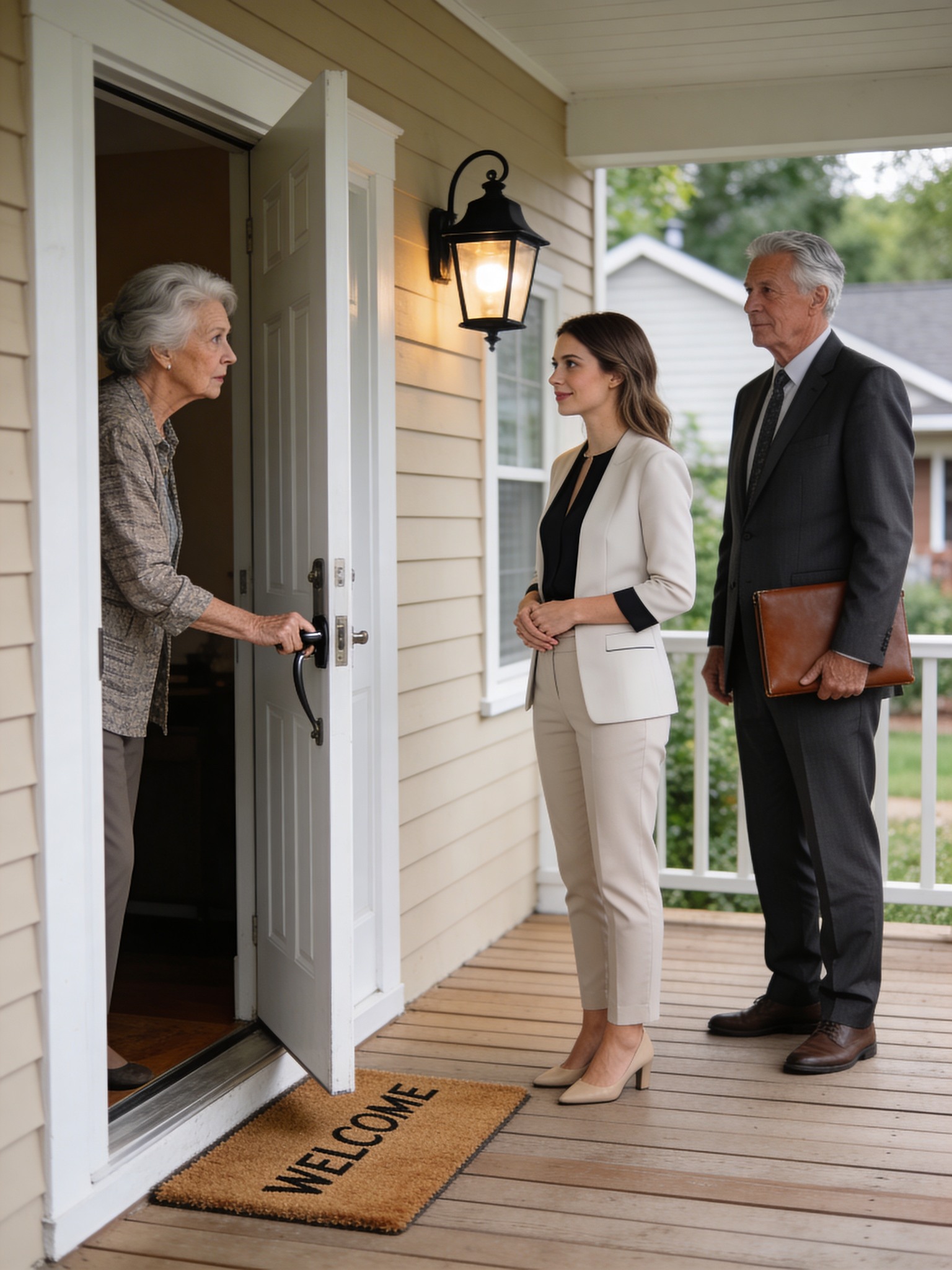
When my son got married, I never mentioned that I had inherited my late husband’s ranch, and I was grateful every single day that I kept that secret to myself. Just one week after the wedding, my new daughter in law, Allison Reed, showed up at my front door in Seattle, her heels tapping sharply against the porch, her silk blouse perfectly pressed, and beside her stood a sharply dressed man holding a leather briefcase like he already owned part of my life.
“Mom, this is Peter Lang, he is a notary,” she said with a polished smile that felt rehearsed and distant. “We came to help you sort out some paperwork for the house.”
My heart sank with a heavy, familiar certainty because I understood exactly why they were standing there. What they did not understand was how much I had already prepared, because after my husband passed away and left me nearly five hundred acres of land in eastern Washington, I learned very quickly that silence could protect more than words ever could.
My name is Susan Harperfield, I am sixty nine years old, and I spent three decades as a wife and mother in a modest home outside Seattle, working part time jobs, saving every dollar, and stretching meals so my family would always have enough. When my son, Andrew, decided to marry Allison, I sold my jewelry to help pay his student loans, brought food when he was sick, and quietly wrote checks that nobody ever mentioned again.
I imagined welcoming Allison like a daughter, so I cleaned every corner of my house, cooked his favorite childhood meals, and wore my best dress while hoping to make a good impression. Instead, she greeted me with fingertips on my shoulders, avoided eye contact, and called me “ma’am” as if I were a stranger in my own home.
During dinner, every question I asked about her life was answered quickly and without warmth, and she barely touched the food I had spent hours preparing. “I usually prefer proper restaurants,” she said softly, as if my kitchen had somehow failed her expectations.
I told myself she might be nervous and that time would soften her edges, but the wedding proved otherwise in ways I could not ignore. She placed me in the fifth row behind coworkers and acquaintances, introduced me as “Andrew’s mom” with no pride, and dismissed my offer to bake our family cake with a casual laugh that felt like rejection.
“Oh no, Mom, I do not want anything homemade,” she said with a smile that felt cold. “We hired a professional pastry chef, it will look like something from a magazine.”
When speeches began, I waited with my notes full of memories and love, but she called nearly everyone else before reluctantly giving me a moment. I had barely started sharing a childhood story when she began clapping loudly, cutting me off while the room followed her lead, and my words disappeared into the noise.
I sat through the rest of the evening watching my son celebrate without me, feeling invisible in a room that should have felt like family. When I told him I was leaving, he hugged me quickly and said, “Thanks for everything, Mom, love you,” before turning away to someone else.
Driving home alone, I remembered my husband’s last words spoken in a quiet hospital room filled with endings. “If anything happens to me, do not let anyone walk over you, because you are stronger than you think and you have more than you realize.”
The next morning, I opened the safe and looked at the deed that changed everything. Beneath old documents was proof of nearly five hundred acres of land in eastern Washington, complete with cattle, a large farmhouse, and several rental cottages, all legally mine.
The property was worth over four million dollars, and I had never told my son it existed. My husband had inherited it, and we planned to give it to Andrew someday, but after meeting Allison, I realized that silence was no longer just protection, it was necessity.
Three days after the wedding, Andrew called with a tone that sounded guided by someone else. “Mom, have you thought about downsizing, because that house is a lot for one person,” he said carefully.
“I am sixty nine, not ninety, and I like my home,” I replied, trying to keep my voice calm.
He continued pushing gently, suggesting assisted living and safety concerns, and I refused each time with steady clarity. Two days later, Allison called with the same suggestions wrapped in polished concern, speaking about selling the house and investing the money for my future.
“I am not selling my house,” I told her firmly.
The calls kept coming, sometimes from both of them, sometimes from her father offering advice, and I realized they were testing how far they could push me. That was when I contacted an attorney named Laura Chen, a specialist in elder law recommended by a friend from church.
“Tell me everything,” Laura said, and I did without leaving anything out.
After a pause, she said, “This sounds like early financial exploitation, and it often comes from family members who believe they are entitled.”
We spent hours preparing a legal shield around my life, including a trust, a power of attorney assigned to my trusted friend Nancy Collins, and documentation of every interaction. “If they bring documents, call me immediately,” she warned, and I promised I would.
So when Allison arrived with the notary and a stack of documents, I already knew how the situation would unfold. She placed the papers in front of me and said, “We made this easy, Mom, the buyer is ready, and you will get eight hundred fifty thousand dollars.”
The documents included more than a sale, they included full control over my finances and healthcare. “Where would I go,” I asked softly, playing the role they expected.
“We found a lovely assisted living place,” she said, smiling confidently.
I picked up the pen slowly, watching her satisfaction grow, and then the doorbell rang.
“Ignore it,” she said quickly, but I stood anyway and walked to the door.
When I opened it, Laura Chen stood there with two police officers beside her. “Hello, Susan, I believe we have documents to review,” she said calmly.
The officers stepped forward and announced they were investigating a report of attempted financial exploitation, and the entire room shifted in an instant. The notary panicked and left quickly, while Allison tried to defend her actions as helpful family concern.
Laura dismantled her argument piece by piece, explaining the legal violations and the coercion involved, leaving no room for excuses. When Andrew entered the house, confused and overwhelmed, he realized too late what had been happening.
“These papers would give you total control over your mother’s life,” Laura said firmly, and his expression changed completely.
“I did not know,” he said, looking at Allison with shock.
“You were planning your future with my money,” I told him quietly.
The officers asked if I wanted to press charges, and I chose not to, but I told them to leave my home immediately. After they left, Laura sat beside me and said, “It is time to talk about your ranch.”
The next day, I asked Andrew to come alone. When he arrived, I showed him the deed and watched his face change as he understood the truth.
“You own all of this,” he whispered.
“Yes, and we planned to give it to you someday, but now I needed to protect it,” I said.
He apologized, overwhelmed with regret, and I told him he needed to make a choice about his marriage. Three weeks later, he filed for divorce, and the legal battles that followed confirmed everything I had feared about Allison’s intentions.
Months later, Andrew began rebuilding his life and our relationship slowly and honestly. I placed the ranch into a trust that he would inherit only after my passing, with strict conditions to ensure respect and responsibility.
Now I sit on the porch of that ranch in eastern Washington, watching the fields stretch under the summer sky while my son helps repair fences nearby. “I never imagined this place,” he says, looking around in quiet awe.
“Your father always loved it here,” I reply, remembering the life we planned.
He thanks me for not giving up on him, and I forgive him because growth deserves a second chance when it is earned. As the sun sets over the land, I realize my husband was right about everything that mattered.
I was stronger than I believed, and I had far more than I ever needed, including the strength to protect myself and the wisdom to know that love should never require surrendering your dignity.