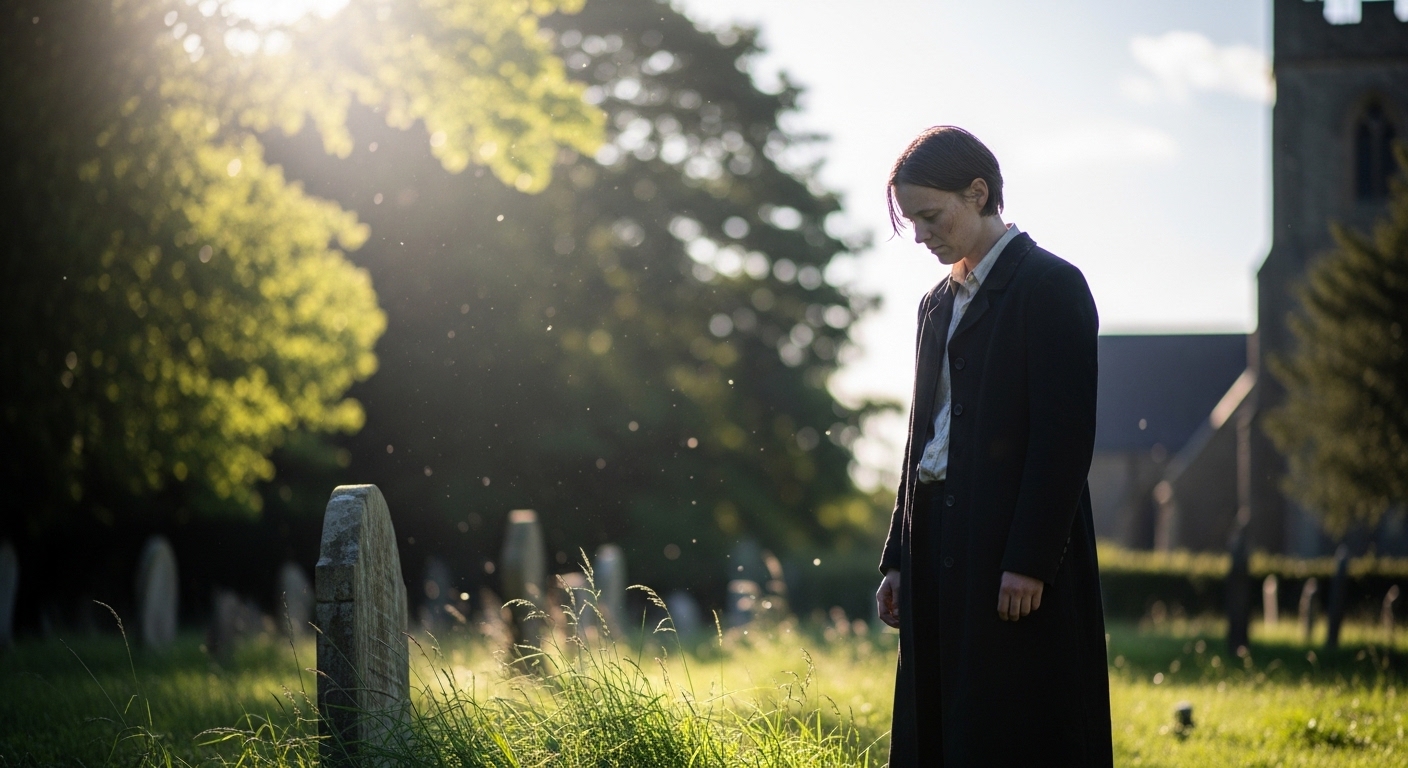
The cemetery was quiet in the late afternoon—the kind of stillness that settles once everyone has said their goodbyes. I stood alone after the funeral, trying to make sense of a future without my husband. As I turned to leave, I noticed an elderly woman several rows away. She held a baby wrapped in a light blanket, her posture calm yet deeply intentional. I didn’t recognize her, yet she remained, watching quietly as if waiting for the perfect moment.
Curiosity led me to approach her. I asked how she knew my husband, expecting her to be a distant relative. Her answer was gentle: she explained that she wasn’t important, but the child was. The baby had lost his mother and had no one left. She stated calmly that my husband had played a meaningful role in ensuring this child’s safety, and she believed that responsibility had now passed to me. Her words were heavy, spoken with respect rather than urgency.
Overwhelmed by grief, I struggled to process this. Taking on a child felt impossible. I told her I needed time; she simply nodded, as if she had expected that reaction. She didn’t plead. She thanked me and walked away, leaving me with unanswered questions and a deep sense of unease. As I sat in my car, I couldn’t drive, my thoughts circling the peaceful way the baby had rested in her arms.
That night, sleep was elusive. Grief opened doors to reflection, and I remembered my husband’s character—his kindness and his belief in doing what was right, even when it was difficult. By morning, something shifted. I realized that life places unexpected paths before us to show us who we are capable of becoming. Confusion turned into clarity: meaning is often found not in our plans, but in what we choose to do when life asks more of us than we thought we could give.