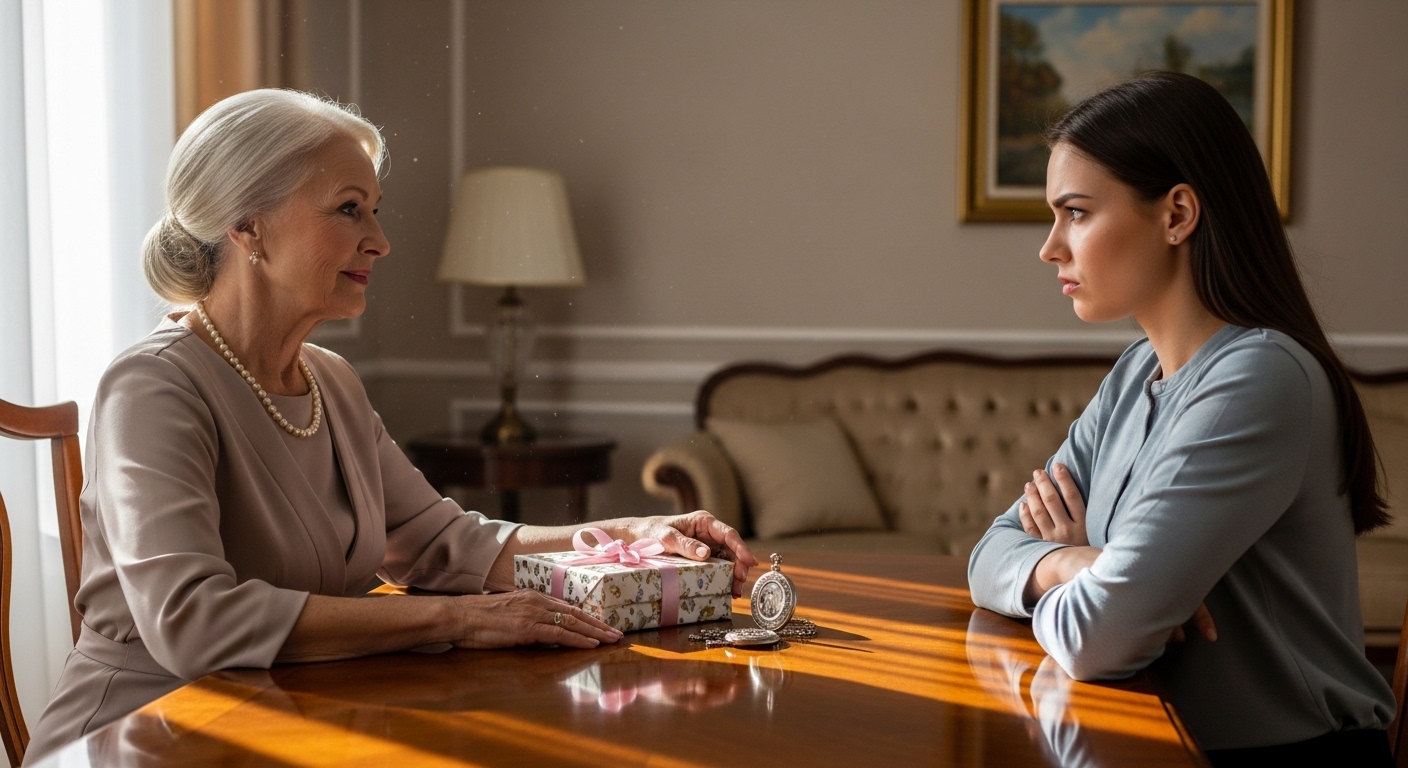
As a widow, my son’s engagement felt like the first real burst of light in years. I wanted to start them off right, so I offered a gift of stability: a significant down payment on their first home. I expected a hug, perhaps a few tears of gratitude. Instead, my future daughter-in-law, Sarah, looked me in the eye and turned it down.
“I don’t want the money,” she said smoothly. “I want the emerald ring.”
My heart stopped. That ring was a cherished gift from my late husband, a symbol of our decades of enduring love. It was the one piece of him I still wore every day. Despite my protests, Sarah’s campaign began—a relentless, subtle pressure disguised as a desire for “family tradition” and the importance of “passing down a legacy.” After weeks of emotional exhaustion, I finally slid the ring off my finger and handed it over, feeling like I had given away a piece of my own skin.
Then, the floor dropped out from under me.
While looking through my late husband’s old bank safe-deposit box for some insurance paperwork, I found a faded receipt and a small, handwritten note from a woman I didn’t know. The dates didn’t match our marriage. They matched his first engagement—the one he told me had ended “meaninglessly” before he met me.
The “unique” emerald, the symbol of our singular love, was actually a repurposed engagement ring intended for another woman. He hadn’t bought it for me; he had simply kept it in a drawer and recycled it when our turn came.
Suddenly, Sarah’s fixation on the ring took on a sinister edge. I saw the way she looked at me when she wore it—not with the reverence of a daughter-in-law, but with the cold satisfaction of someone who knew a secret I didn’t. She hadn’t wanted a family heirloom; she had wanted to own the physical proof that my “perfect” marriage was built on a hand-me-down.
I didn’t just lose a ring. I lost the purity of my memories, realizing that the symbols we cherish most can be haunted by histories we were never meant to see.